INSURANCE | FINANCIAL SERVICES
Taking control of your insurance, made easy.
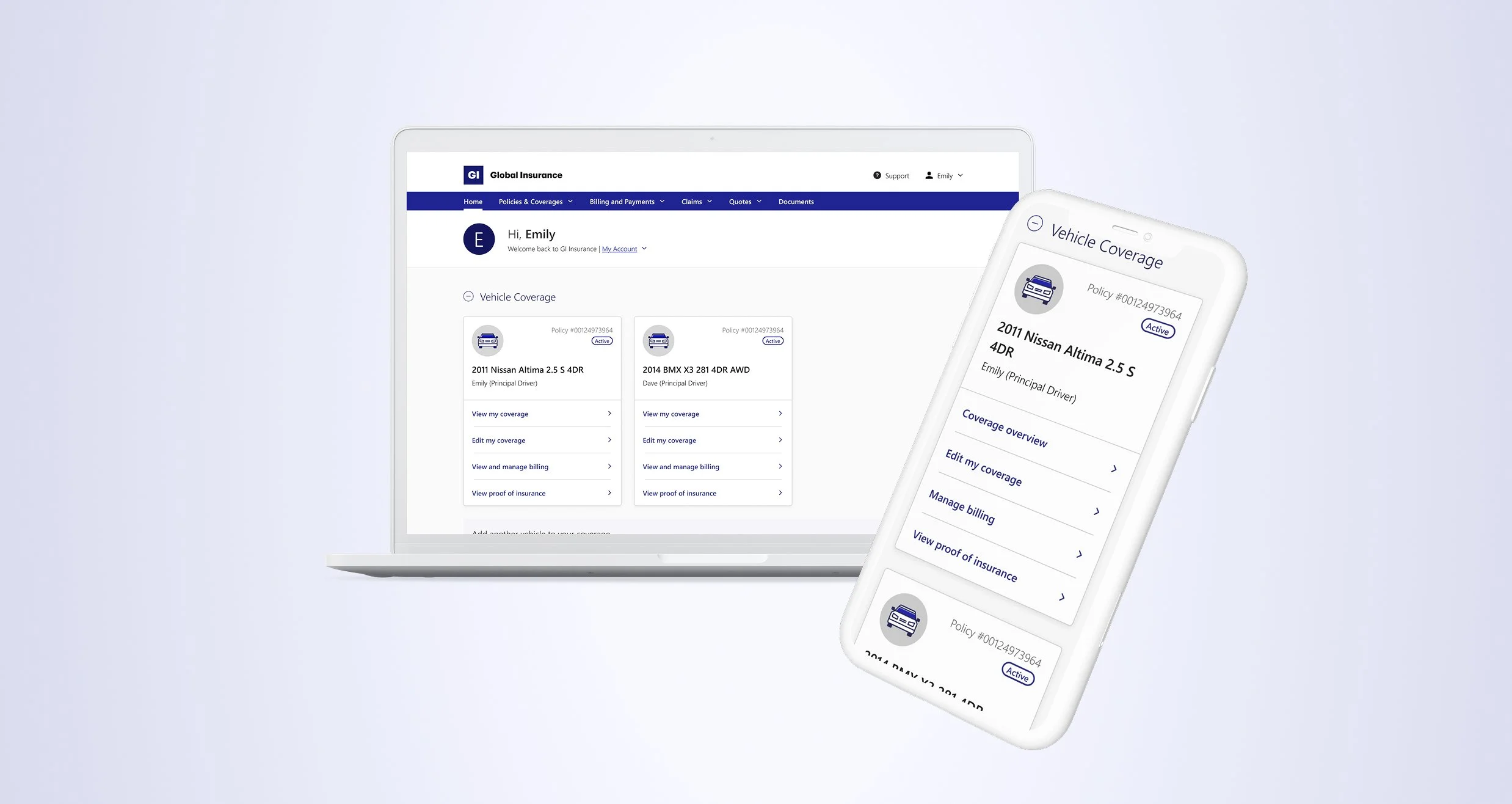
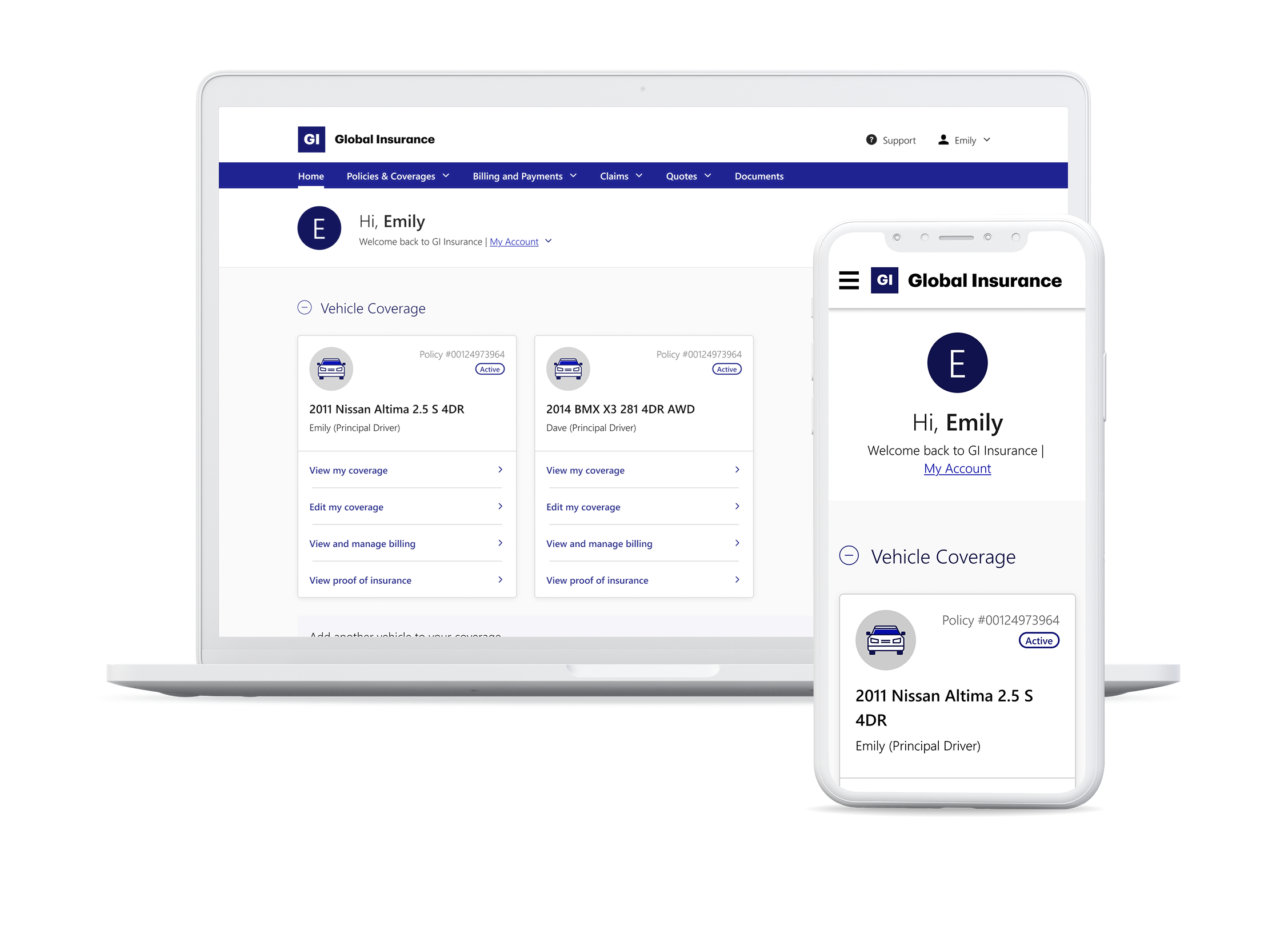
A transformed and intuitive dashboard, designed to give customers control over their insurance plans, minimize confusion, and reduce the need for support calls.
Problem Overview
A self-service portal that had customers reaching for the help line instead
The existing portal of a leading Canadian insurer, was built around the insurer's data model, instead of the customer's mental model. It surfaced scattered tasks across screens with no navigational thread between them, dense detail instead of clear action, and long policy numbers instead of easily recognizable vehicle names. Customers who came in to do something simple - check their coverage, find a document - frequently couldn't complete it without calling for help.
The business needed to shift transactions online and reduce support volume. My role was Lead UX Designer end-to-end - from facilitating stakeholder workshops through information architecture, user journeys, design reviews, and UX handoff.
My role & responsibilities
Lead UX Designer
Strategy & planning, workshop facilitation, cross-functional stakeholder management, information architecture, user journey mapping, design reviews, wireframes for dev handoff
Duration
March – October 2022

What made this hard
The real problem wasn't just complexity - it was misplaced trust
The initial brief framed this as just a wayfinding problem. Early research challenged that. The harder problem was that customers didn't trust the portal to help them. They came in to complete a task, couldn't quickly confirm they were in the right place, and abandoned - or called in for help instead.
Just redesigning navigation wasn't going to fix that. The design had to rebuild confidence from the first screen, and do it within the constraints of a legacy back end that hadn't been built with self-service in mind.
Central design question: How do we design a portal that customers trust enough to use on their own, instead of feeling the need to call in for help?
What we delivered
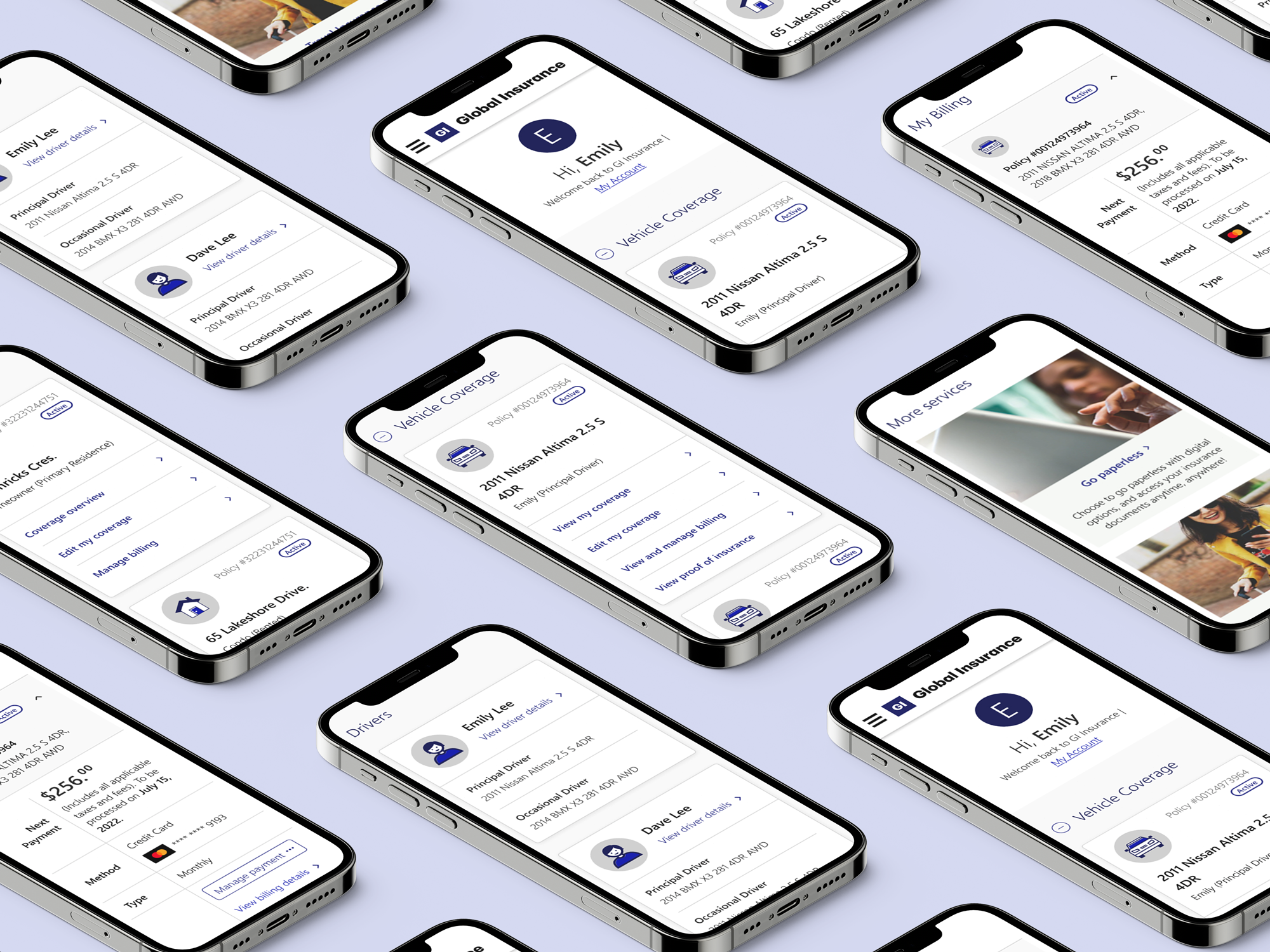
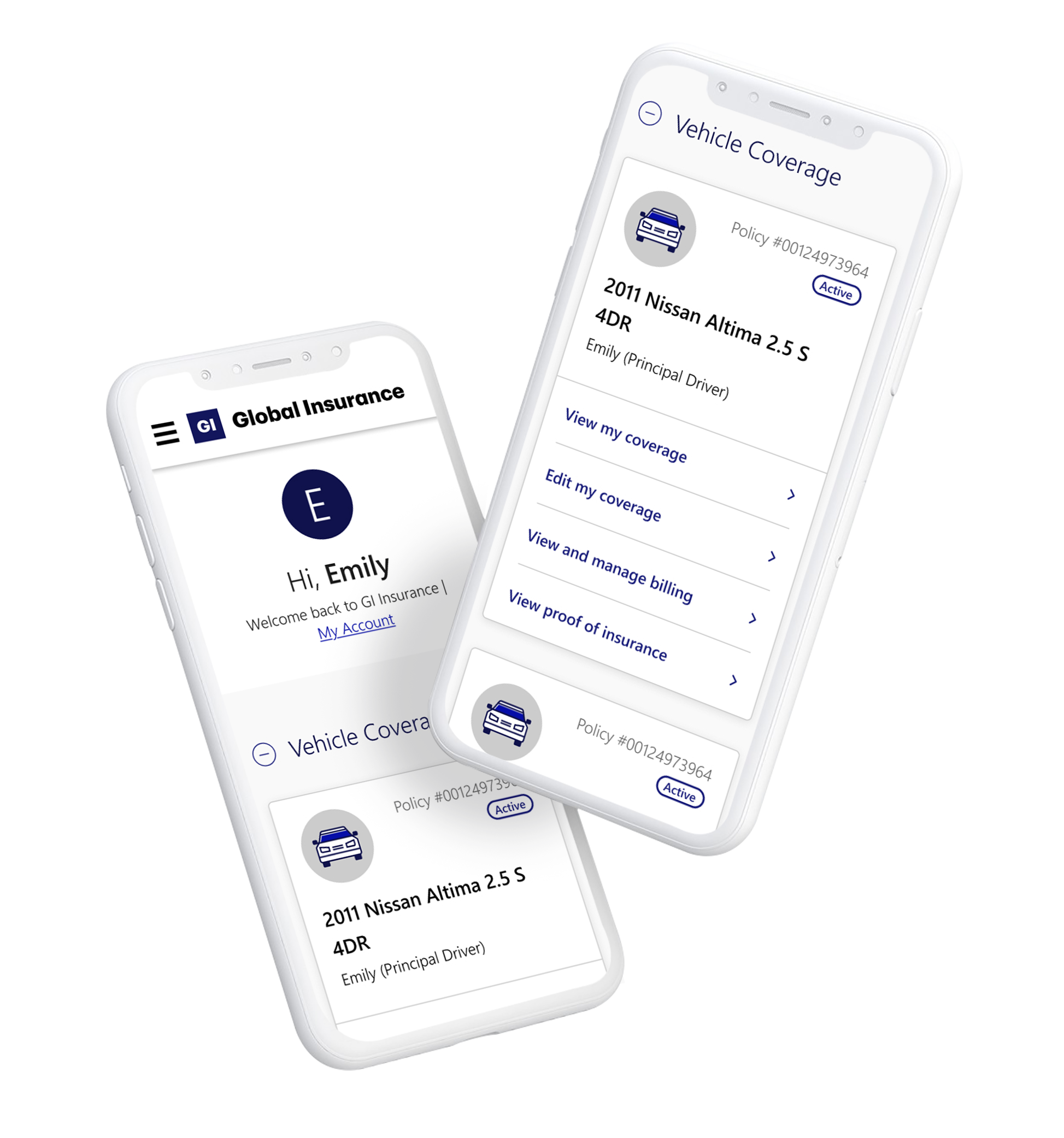
A redesigned dashboard organized around how customers think about their insurance, and not how the back end categorizes it.
The redesigned dashboard launched in late 2022, with post-launch metrics showing immediate impact:
17% increase in digital share, i.e. transactions completed online, thereby reducing reliance on support channels.
35% increase in login rate, reflecting higher user engagement
20% increase in registration rate, demonstrating improved customer adoption and confidence
Project under NDA. Full case study is password-protected
View other projects
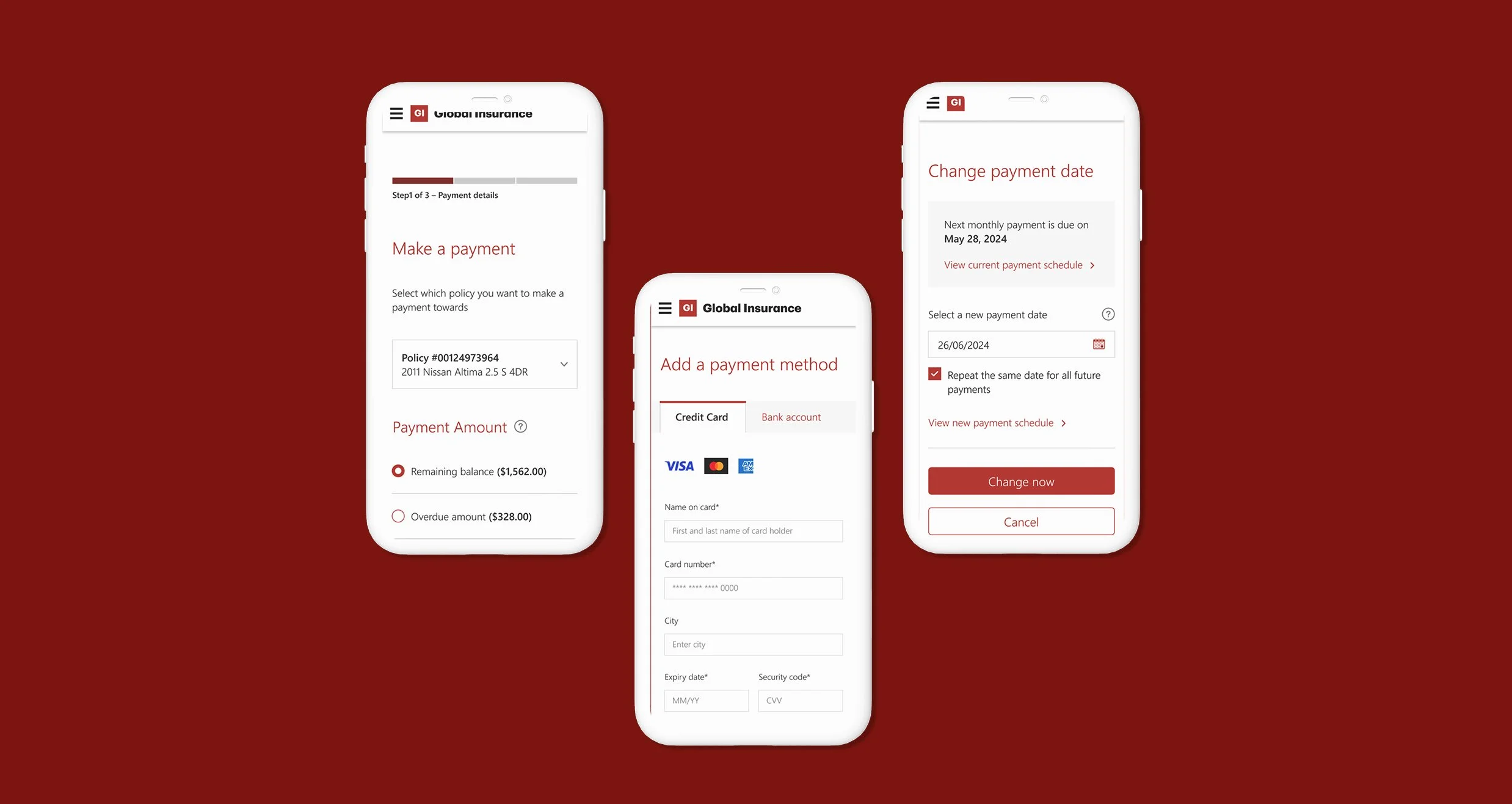
Streamlined billing for effortless self-service.
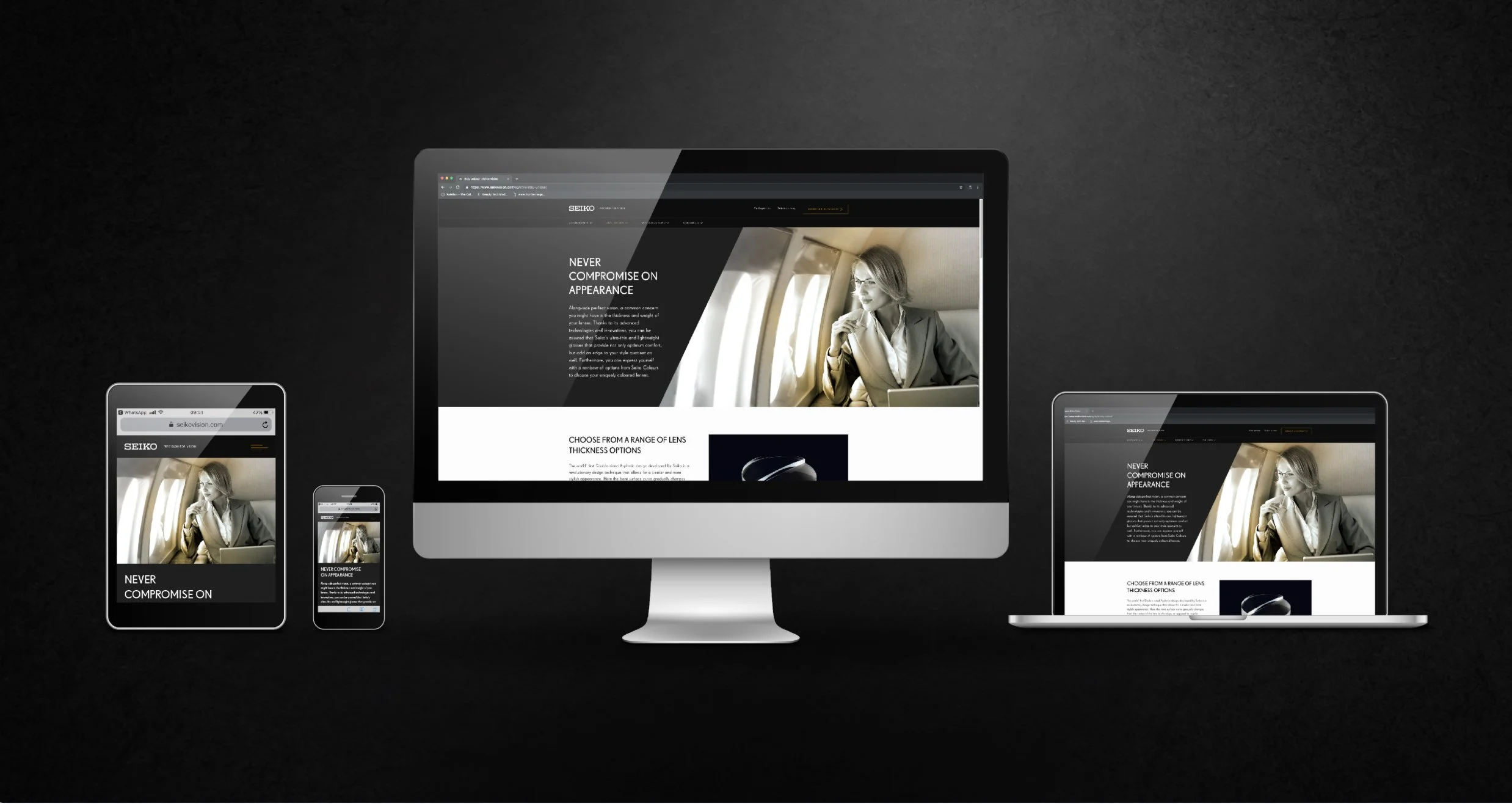
A fresh take on the Seiko eyewear experience.